



Growing Communities
When a Patch of Land Becomes a Shared Garden

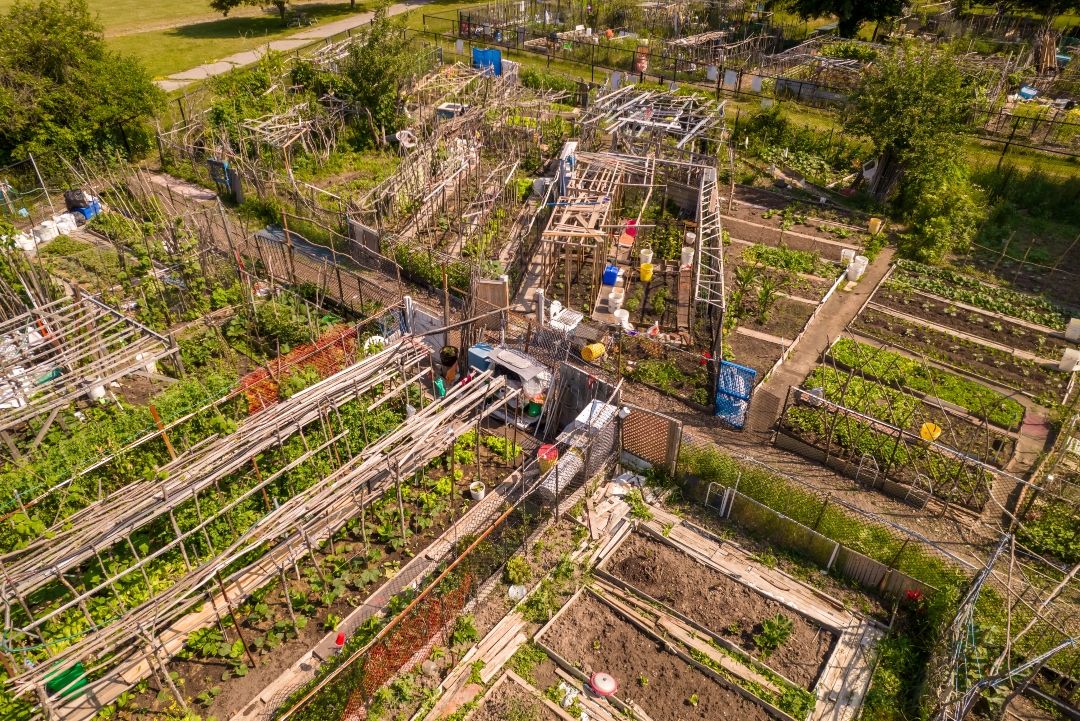
In a shared garden, rows of tomatoes and peppers tower toward the sky and herbs push up through the soil. But something else grows here as well: community bonding.
Across the country, cities are waking up to what community gardens can do. They're not just green spaces. They're a practical, powerful way to bring healthier food back into neighborhoods that need it most.
More Than a Plot of Land
At their heart, community gardens are about people. The vegetables are the excuse; the connection is the reward.
"Community gardens have the potential to build social trust and shared responsibility among neighbors, and historically, they have served the important function of self-determination and food sovereignty," says Laurie J. Beyranevand, director of the Center for Agriculture and Food Systems and professor of law at Vermont Law and Graduate School. "In many communities, these gardens bring people together in a way that few shared spaces are able to do."
Siobhan Shaw, gardening writer and founder of Growing to Give, has seen this firsthand. "I've had the privilege of standing in the dirt with neighbors, volunteers, and kids who had never planted a seed before, and watching what happens when a piece of land becomes something shared," she describes. "People don't stay for the vegetables. They stay because something shifts when they're in the garden."
Classrooms Without Walls
Gardens teach lessons no textbook can. They turn abstract ideas about food and the environment into something you can touch, taste, and grow.
"Gardens are hands-on classrooms for understanding soil health, water stewardship, and where food comes from," Beyranevand says. "In our interviews with urban agriculture practitioners nationwide, this came up constantly. Gardens are often where kids get their first real exposure to growing food, and where new gardeners learn from more experienced neighbors through informal, peer-to-peer knowledge sharing."
Shaw has watched that transformation up close. "I've seen kids who were shy at the start of the season become the ones leading the harvest by the end, dragging their parents out to the farm," she says. "You start with soil and seeds, and somehow you end up with people who know each other's names, stories, and struggles."
Bringing Fresh Food Where It's Missing
For many neighborhoods, the nearest grocery store is miles away, and fresh produce is a luxury. Community gardens can help close that gap, but only when cities clear the path.
"Community gardens can make fresh produce directly available in neighborhoods left out of the conventional food retail system," Beyranevand explains. "Importantly, though, that only works at scale if local zoning actually supports those efforts by allowing things like on-site sales or produce donation, which is why we published a guide specifically on updating municipal codes to support food access."
The impact can be staggering. During the pandemic, Shaw and her team built and managed a one-acre community farm.
"It wasn't fancy. It was hot, dusty, and full of learning curves," she recalls. "But that little acre ended up producing more than 100,000 pounds of fresh produce, all donated to local food banks. I still remember the first big harvest day: trucks and tractors lined up, volunteers passing crates hand to hand, and this quiet realization that something we planted months earlier was now feeding people we would never meet."
The Real Challenges
Starting a garden is one thing. Keeping it alive for years is another. The obstacles are real, but so are the solutions. For many families living in food deserts — areas where affordable fresh food is difficult to access — community gardens can help fill the gap.
Land tenure tops the list. "Access to land isn't the same as secure, long-term tenure," Beyranevand notes. "In Philadelphia, gardens at risk of losing their land helped drive a reform of the state's adverse possession law, creating a real pathway to secure title to that property."
Zoning, water costs, and contaminated soil round out the usual suspects. "Cities that address them directly, through clear code definitions, subsidized soil testing, or funding like EPA Brownfields grants, as Phoenix has done, can see real results," she adds.
Shaw offers hard-won wisdom from the field. "The garden has to start with the people who will use it. I've sat in circles where we scrapped beautiful plans because they didn't match what the neighborhood actually needed," she says. "And the best crops are the ones people already know how to cook. I'll never forget a harvest where we grew Swiss chard, and it just sat there in the cooler. Meanwhile, the tomatoes and peppers disappeared in hours."
What Makes a Garden Last
The community gardens that stand the test of time usually have more than fertile soil and good intentions behind them.
"The gardens that last have secure land tenure, whether through a land trust, long-term lease, or ownership, and institutional support that isn't dependent on one person or a temporary grant," Beyranevand says. "More importantly, the people using the space need real ownership over how it's run. That's what keeps people coming back season after season."
Shaw agrees and puts it plainly. "The gardens that truly thrive aren't the ones with the best design on paper. They're the ones where people feel like it's theirs," she says. "You need a few anchors, not formal leaders, just people who show up consistently. Every strong garden I've been part of has had at least one of those. Sustainability isn't a buzzword in the field. It's whether the irrigation holds up in July, whether the soil still produces in year three, whether someone is still there to care when the excitement fades."
Growing Something That Lasts
The food matters. Fresh vegetables in a food desert can change how a family eats. But ask anyone who's spent a season in the dirt, and they'll tell you the harvest is only half the story.
"People don't stay for the vegetables," Shaw says. "They stay because something shifts when they're in the garden." Her work brings her back to a lesson from her childhood on a family farm. "My mother taught me that food is never just food. It's care. It's an effort. It's people showing up for each other."
That's the real promise of community gardens. Cities that invest in them through smart zoning, land security, and genuine partnerships aren't just planting food. They're planting trust, resilience, and belonging. Start with soil and seeds, and you just might grow a community.
Tags:Garden & Landscape











Acreage Life is part of the Catalyst Communications Network publication family.